
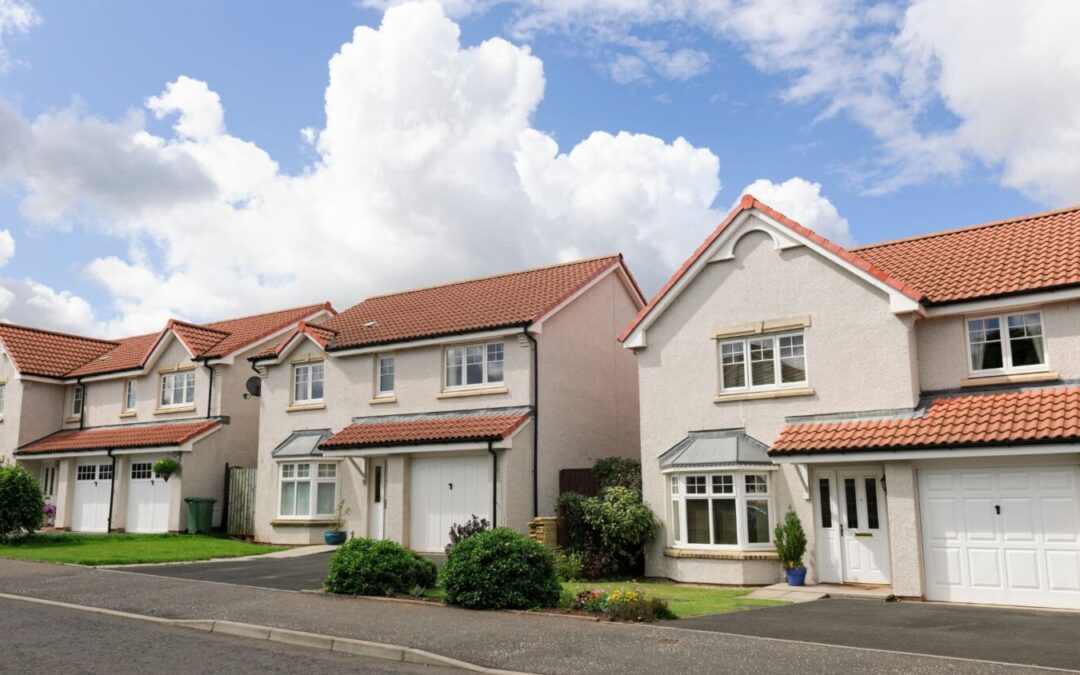
One of the most fundamental decisions facing anyone looking to buy a home is whether to purchase a new build or an existing property. Both have genuine advantages, and the right answer depends on a buyer’s priorities, lifestyle, financial situation, and appetite for a project. What makes the decision difficult is that the two options differ in so many ways, from the physical condition of the property and the costs of owning it, through the purchasing process, to the experience of moving in and settling into a new home.
This article explores the key differences between buying new houses north wales and buying existing, setting out the practical considerations that should inform the decision and helping buyers think more clearly about which option is likely to suit them best.
What Defines a New Build Property?
A new build is a property that has not previously been lived in. It may be part of a developer’s phased release of a larger site, a small collection of homes built by a local or regional housebuilder, or an individual self-build. In the UK property market, new builds are typically purchased off-plan or during construction, though some are sold on completion when the home is already finished and ready to view.
New build homes come in a range of types and specifications. At one end of the spectrum are volume-built homes offered by large national developers. At the other are smaller developments by regional builders, often with higher specifications, more attention to individuality, and closer relationships between buyer and builder.
The Case for Buying New
Everything is Modern and Ready
The most obvious advantage of a new build is that it is exactly that: new. The boiler, the electrics, the plumbing, the roof, the windows, all of it is newly installed and built to current standards. A buyer moving into a new build faces none of the early-years maintenance costs that are common in older properties, where systems and components are nearing the end of their working lives.
Modern building regulations require new homes to meet standards for insulation, airtightness, and energy efficiency that are significantly higher than those applied to homes built even twenty years ago. A well-built new home will typically be far cheaper to heat than an equivalent older property and will have substantially lower energy bills. As energy costs have become a more significant household expense, this advantage has become more material.
Warranty Protection
New build homes come with a structural warranty, typically provided by the National House Building Council under its Buildmark scheme, or by an equivalent provider. This warranty covers the buyer against significant structural defects for ten years from the date of completion, providing a level of protection that is simply not available when buying an older home.
In the first two years of the warranty period, the developer is responsible for remedying any defects reported by the buyer. This snagging period, during which minor issues that have arisen during construction are identified and resolved, is an important part of the new build ownership experience and a practical protection that buyers should be aware of and use.
Stamp Duty and Financial Incentives
Developers and government schemes have at various times offered incentives to new build buyers that are not available in the second-hand market. Stamp duty assistance, part exchange schemes, deposit contributions, and other buyer incentives can make new builds more financially accessible, particularly for first-time buyers or those looking to move up the market without releasing a large amount of capital.
The availability of these schemes varies by developer, development, and prevailing market conditions, and buyers should always verify the specific terms and ensure they are not factored into an inflated purchase price.
Customisation and Specification
Buying a new build at an early stage of construction often gives buyers the opportunity to influence the specification of their home: choosing kitchen finishes, floor coverings, tile selections, and occasionally the layout of certain spaces. The extent of this flexibility varies enormously between developers, but it is a feature of new build purchasing that has no equivalent in the second-hand market, where you take the property as you find it.
Chain-Free Purchasing
New build purchases are chain-free by definition. There is no seller waiting to complete on another purchase, no risk of a chain collapsing above or below, and no interdependence with the decisions of other parties. For buyers who have experienced the stress and uncertainty of chain-dependent transactions, this is a significant practical advantage.
The Case for Buying an Existing Property
More for Your Money on Square Footage
In most parts of the country, existing properties offer more space per pound than new builds. Older homes, particularly those built in the mid-twentieth century or earlier, were often constructed to more generous internal dimensions than today’s new build equivalents at comparable price points.
This is not a universal rule. High-quality small-development new builds can be built to very generous specifications and dimensions. But as a broad generalisation across the market, buyers who prioritise size for money will often find better value in the second-hand market.
Character and Setting
Older properties frequently offer architectural character, established gardens, and a sense of place that takes time to develop. A Victorian terrace, an Edwardian semi, a 1930s detached home with its original features, or a mid-century property in a mature setting all offer things that are genuinely difficult to replicate in a new build context, regardless of the quality of the construction.
For buyers who value original features, character detailing, or the feel of a property that has had history lived within it, this is a meaningful consideration.
Established Neighbourhoods
Existing homes are located in established streets and neighbourhoods where the community, the local amenities, and the character of the area can all be assessed directly before buying. The buyer can walk the street, visit the local cafes, observe the traffic and parking at different times of day, and speak to neighbours.
A new development, by contrast, is being built into a context that will evolve as the site is completed and as the community of residents becomes established. The immediate environment of a new build at the point of purchase is a construction site, and the finished neighbourhood is something the buyer has to visualise rather than experience.
The Key Practical Differences in the Buying Process
Reserving Off-Plan
Buying a new build typically begins with a reservation, in which the buyer pays a fee to secure a specific plot or property type on the development. The reservation holds the property for an agreed period while the legal process is progressed and any mortgage arrangements are put in place.
The timeline from reservation to legal completion on a new build varies significantly depending on the stage of construction. For properties purchased very early in a development, the wait between reservation and completion can extend to twelve months or more. For homes that are already substantially complete, the timeline may be much shorter. Buyers need to plan their financial and living arrangements accordingly.
Mortgage Considerations
Some lenders are more willing than others to lend on new build properties, and the terms may differ from those available for existing properties. Loan-to-value ratios for new builds are sometimes more restrictive, reflecting the fact that new build values can be more volatile in the short term. Buyers should take independent mortgage advice early in the process and confirm that their financing is in place before committing to a reservation.
Snagging
After moving into a new build, most buyers will identify minor defects during the early months of occupation. These might include items such as paint imperfections, poorly fitted fixtures, gaps in sealant, or minor joinery issues. Compiling a comprehensive snagging list and submitting it to the developer promptly is an important step. Independent snagging inspectors can be hired to carry out a thorough check before or just after completion, which can be a worthwhile investment for a purchase of this size.
Making the Right Decision
The choice between new and existing ultimately comes down to what a buyer values most and what their practical circumstances allow.
For buyers who prioritise energy efficiency, low early-years maintenance costs, warranty protection, and a clean, modern home that requires no immediate work, a well-built new development is a compelling option. This is particularly true in locations where the development itself is well-placed, where the local area offers strong amenities and good connections, and where the developer has a reputation for quality and service.
For buyers who prioritise space for money, established character, or the ability to fully assess what they are buying before committing, an existing property may be more suitable.
Many buyers find that the decision is made clearer by being honest about the amount of time, money, and energy they are genuinely willing to invest in a property that needs updating. A period home with original features and scope for improvement is genuinely appealing, but it comes with costs and demands that a new build simply does not. Understanding that trade-off honestly is the starting point for making a good decision.
Whatever the choice, seeking independent legal and financial advice, taking time to research the developer or vendor thoroughly, and making sure the location genuinely works for your lifestyle and practical needs are the foundations of a good property purchase.
Recent Comments